Oasi Vinci Natural Park
Location: Monterenzio Prov. Bolonia, Italy
Mission Reference # QLF2026-2
Education and conservation project
Mission Status: Funding Active
Category: Infrastructure - Education - Personal Family Support
Funds Required: 690.000 €
Mission Description
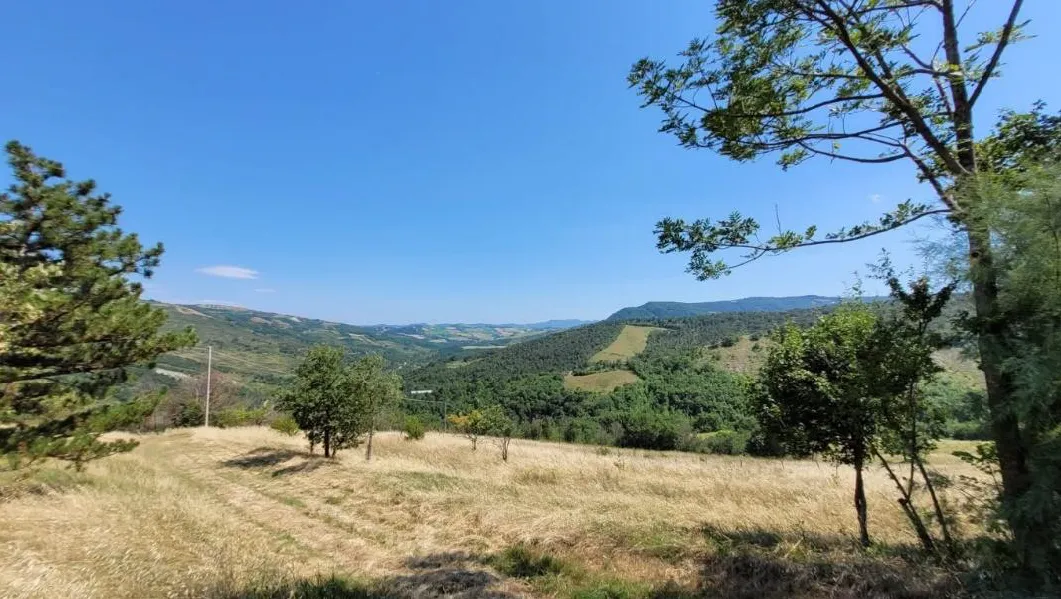
The Technical Integrated Project proposes the creation of an 80-hectare Natural Park in the Tuscany-Emilia-Romagna region of northern Italy, at an elevation of 200–250 meters above sea level. Strategically positioned between these two culturally and ecologically rich regions, the park will serve as a multifunctional space that seamlessly integrates conservation, ecological restoration, and organic agriculture.
The property includes 30 hectares of established forest, 40 hectares of arable land to be converted into new forest, 10 hectares of meadow designated for organic horticulture and afforestation, and a 23-hectare chestnut grove. Key infrastructure features a sustainably restored rural building, a 10,000 m² artificial lake hydraulically connected to a 5,000 m² wetland/swamp, and a strategic helipad for wildfire prevention and emergency response.
Tuscany and Emilia-Romagna provide an ideal setting with their high-value agriculture (wine and olive oil), strong cultural heritage protection, tourism flows, advanced agro-industrial systems, and active sustainability policies. The project directly addresses pressing challenges such as anthropogenic pressure, habitat fragmentation, and climate change impacts on local biodiversity. It will function as an active ecological restoration platform, a demonstration model of regenerative agroecology, a green infrastructure system for wildfire risk mitigation, and a center for intergenerational environmental education.
The general objective is to design, implement, and consolidate this 80-hectare multifunctional natural park, combining ecological restoration, species reintroduction, certified organic agriculture, environmental education, and strategic water infrastructure to contribute to sustainable regional development.
Specific objectives include establishing formal partnerships with leading conservation organizations, implementing scientifically validated species reintroduction programs, designing ecological zoning with core conservation areas, buffer zones, and productive sectors, reforesting 40 hectares with native tree species, constructing the integrated lake and wetland system, launching certified organic horticultural production for local social supply chains, and generating permanent rural employment for at least four positions.
The project is grounded in a solid theoretical framework drawing from conservation biology, species reintroduction protocols, organic agriculture principles, sustainable development theory, and ecological hydraulic infrastructure design. It fully aligns with European and international strategies for ecosystem restoration, biodiversity protection, and climate adaptation.
Progress Dashboard
The master plan organizes the 80 hectares into clear functional zones: a core conservation area (existing forest and chestnut grove), a 40-hectare forest restoration zone, a 10-hectare agroecological production area, an integrated water system, and an infrastructure zone featuring the restored rural building and helipad.
Reforestation will use native species adapted to local conditions at a density of 800–1,200 trees per hectare, supported by temporary irrigation and a three-year survival monitoring program. The organic agriculture component will feature diversified horticultural production, on-site composting, full EU organic certification, and supply agreements with local nurseries.
This investment is classified as long-term environmental capital infrastructure, with returns measured not in financial profit but in ecological, climatic, and social impact.
The expected benefits are multidimensional:
• Environmental: increased biodiversity, carbon sequestration, and habitat restoration
• Social: improved local food security, environmental education programs, and sustainable rural employment
• Territorial: enhanced wildfire prevention capacity, greater climate resilience, and improved landscape connectivity
Strategic partners include WWF (international expertise in biodiversity protection, research, and policy advocacy) and LIPU (Italian specialist in bird conservation, habitat restoration, protected area management, and environmental education). These collaborations ensure scientific rigor, regulatory compliance, and continuous biodiversity monitoring.
In conclusion, this Natural Park represents far more than land development — it is the creation of a living ecological infrastructure designed to generate long-term environmental resilience and social value. By integrating ecological restoration, sustainable agriculture, biodiversity protection, and wildfire prevention into one replicable model, the project stands as a strategic environmental legacy investment. A forest planted today truly means climate stability and community wellbeing tomorrow. This initiative perfectly embodies the Quantum Legacy Foundation’s vision of sustainable, high-impact projects that deliver lasting benefits for people and the planet.
jOIN US
Observe sentiment via anonymous feedback or contribute to a mission. Choose a project, learn the details, track progress, and contribute to real change.